
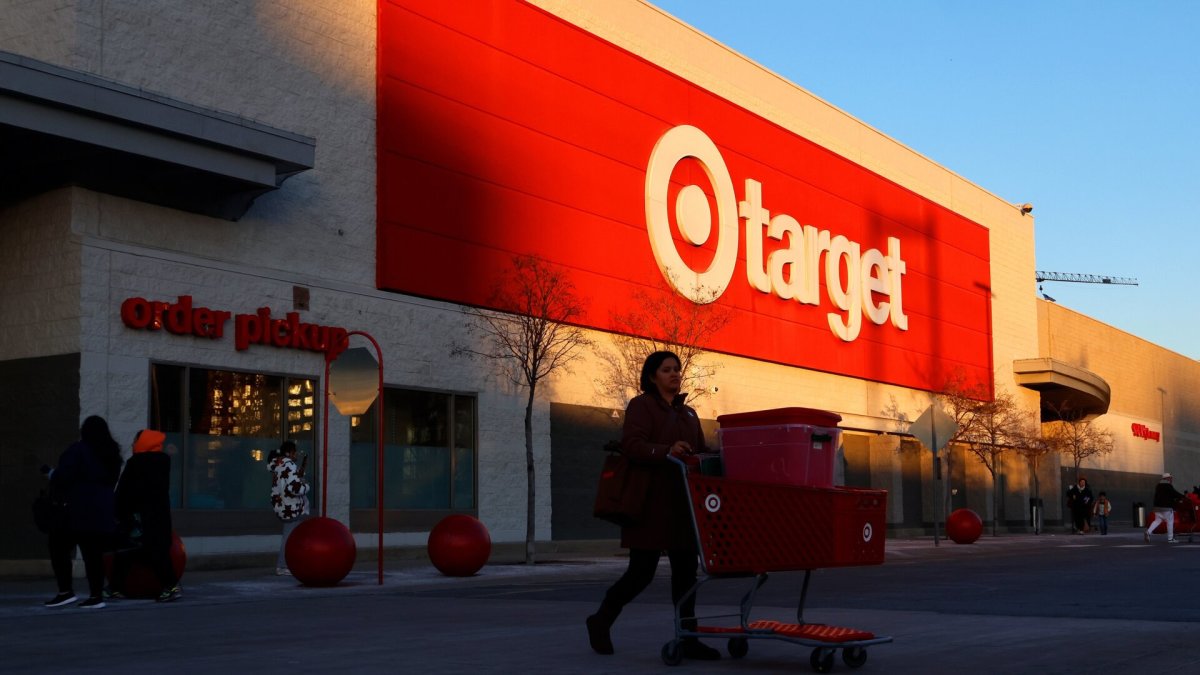
Target Corporation has quietly become one of retail’s most reliable dividend stocks, delivering 57 straight years of payout increases.
That streak now faces its toughest test yet as Target (TGT) navigates what COO Michael Fiddelke called a “period of transformation” marked by softening sales and mounting pressure on margins.
The retailer’s answer? A $5 billion capital push in 2026, roughly $1 billion more than 2025, aimed squarely at protecting the dividend while repositioning the business for growth.
“We’re not waiting for conditions to improve. We are driving the change ourselves right now,” Fiddelke said during Target’s third-quarter earnings call.
The comments came just weeks after the company eliminated 1,800 headquarters roles, an 8% cut designed to strip out layers and speed up decision-making.
Fiddelke is Target’s incoming CEO and aims to stabilize its payout not by cutting costs, but by investing heavily in the infrastructure needed to compete in modern retail.
G
Target stock is down 40% in five years
While broader markets hover near all-time highs, Target has significantly underperformed in recent years.
In the last five years, Target stock has fallen by 40%. Notably, the drawdown has raised its 2026 dividend yield to 4%
Target’s adjusted earnings per share has narrowed from $13.56 per share in fiscal 2022 to (ended in January) to $8.86 per share in 2025. Analysts forecast earnings to fall to $7.30 in fiscal 2026.
Is the dividend yield sustainable?
Target is projected to end fiscal 2026 with free cash flow of $2.47 billion, down from $4.48 billion in 2025.
Given an annual dividend expense of $2.06 billion, Target’s dividend payout ratio is around 83.4%, which is quite high.
Analysts expect free cash flow to fall to $1.8 billion in fiscal 2027, pushing its payout ratio above 100%.
More Dividend Stocks:
- Is Macy’s dividend safe after massive store closures?
- Tim Cook quietly hands Apple investors a surprise pay raise
- Cathie Wood owns a $239 million stake in this dividend stock
The retail giant will be forced to fund its dividend from its cash balance, which stands at $3.8 billion.
Target dividend metrics at a glance
- Dividend Yield: 4%
- Payout Ratio: 83.4%
- Quarterly Dividend: $1.14 per share
- Annual Dividend: $4.56 per share
- Consecutive Years of Increases: 57 (Dividend King status)
- 5-Year Dividend Growth Rate: Approximately 11% annually
It’s evident that Target will have to improve profit margins at an accelerated pace to continue its impressive dividend growth streak.
Target turns stores into shipping centers
The backbone of Target’s plan is a complete rethinking of how its stores operate.
Instead of treating locations as places to sell products, Target is converting them into mini-distribution centers that fulfill online orders faster and cheaper than traditional warehouses.
The strategy isn’t new, but the scale is. Target now fulfills over 96% of its digital orders directly from store shelves, a number that continues to climb.
CFO Jim Lee pointed to meaningful progress during the earnings call:
That growth is powered by Target Circle 360, the company’s membership program that has become a key driver of digital sales.
- Target is also rolling out learnings from a Chicago pilot to 35 additional markets before year-end.
- The model assigns specific roles to each store based on location and capacity.
- High-traffic stores focus on serving in-store customers, while lower-volume locations with big backrooms handle the bulk of brown-box shipping.
The result: faster delivery times for customers and lower fulfillment costs for Target. Fiddelke said the changes have already reduced average fulfillment expenses and enabled faster delivery to customers.
Private labels take center stage
Target’s second major move is to double down on its owned brands.
- The company has built a portfolio of private labels that now includes billion-dollar brands such as Good & Gather, Threshold, and Cat & Jack.
- These brands deliver higher profit margins than national products, giving Target more cushion to protect its dividend even when sales soften.
Chief Commercial Officer Rick Gomez highlighted the strategy during the call. “As a percentage of our total Food & Beverage sales, we are selling twice the volume of new products compared to the industry,” he said.
Target is using this momentum to expand into categories such as wellness beverages, seasonal foods, and premium home goods.
The private-label push also helps insulate Target from inflation. When national brands raise prices, Target can adjust pricing on its own products more freely without losing shelf space or triggering vendor disputes.
The $5 billion gamble
Target’s decision to increase capital spending to $5 billion in 2026 stands out in a retail landscape where most chains are pulling back.
Related: Costco solves problem that plagues Walmart and Target
The funds will be allocated to three areas: store remodels, technology upgrades, and supply chain improvements.
Lee said the spending will support “our store experience and remodel program, a step-up in technology and digital fulfillment capabilities and investment in new stores.”
Target is also banking on bigger-format stores continuing to outperform. Fiddelke noted that new large-format locations are exceeding initial sales expectations, and Target plans to keep opening them in markets across the country.
Store remodels remain a priority as well. Target has refreshed more than 1,000 locations in recent years, and the company has seen strong sales lifts at stores updated with the latest merchandising and layout changes.
But the investment comes with risk.
- Target’s third-quarter comparable sales fell 2.7%, reflecting continued softness in discretionary categories such as Home and Apparel.
- Net sales were down 1.5% year over year, and the company narrowed its full-year adjusted earnings guidance to $7 to $8 per share.
“While our Q3 results were consistent with our expectations, we continue to see a high degree of volatility in our business,” Lee said.
The company projects a low-single-digit decline in comparable sales for the fourth quarter.
Can Target pull it off?
The question investors should ask is whether Target can protect its dividend in the short-term, given that its dividend payout ratio will exceed 100% in fiscal 2026.
Wall Street will be closely watching to see if the $5 billion investment plan can reverse sales trends and restore growth before patience runs out.
Fiddelke made it clear the company isn’t looking for a quick fix. “We know what makes Target special, an unmatched merchandising authority and the ability to create joy through an elevated and inspiring guest experience,” he said.
The company will share more details at its Financial Community Meeting in March, where investors will get a firsthand look at product changes and technology upgrades designed to win back customers.
For now, Target’s 57-year dividend streak remains intact, backed by a leadership team willing to make big bets to keep it that way.
Related: Target goes big in its battle with Walmart
