
For years, the trillion-dollar club was an exclusive playground for tech giants, with their big spends and even bigger revenues. So when a healthcare company like Eli Lilly crossed that threshold and became the first in its sector to reach those numbers, it raised questions.
And the answers were apparent: more research is underway in these areas, more jobs and investment are coming in, and not to forget an expanding weight-loss and diabetes industry.
And now, after names like Apple, Nvidia, Meta, and Alphabet, comes a company that caters to the everyday needs of working-class individuals, from milk and tires to furniture and t-shirts.
Shutterstock.
New face of the trillion-dollar club
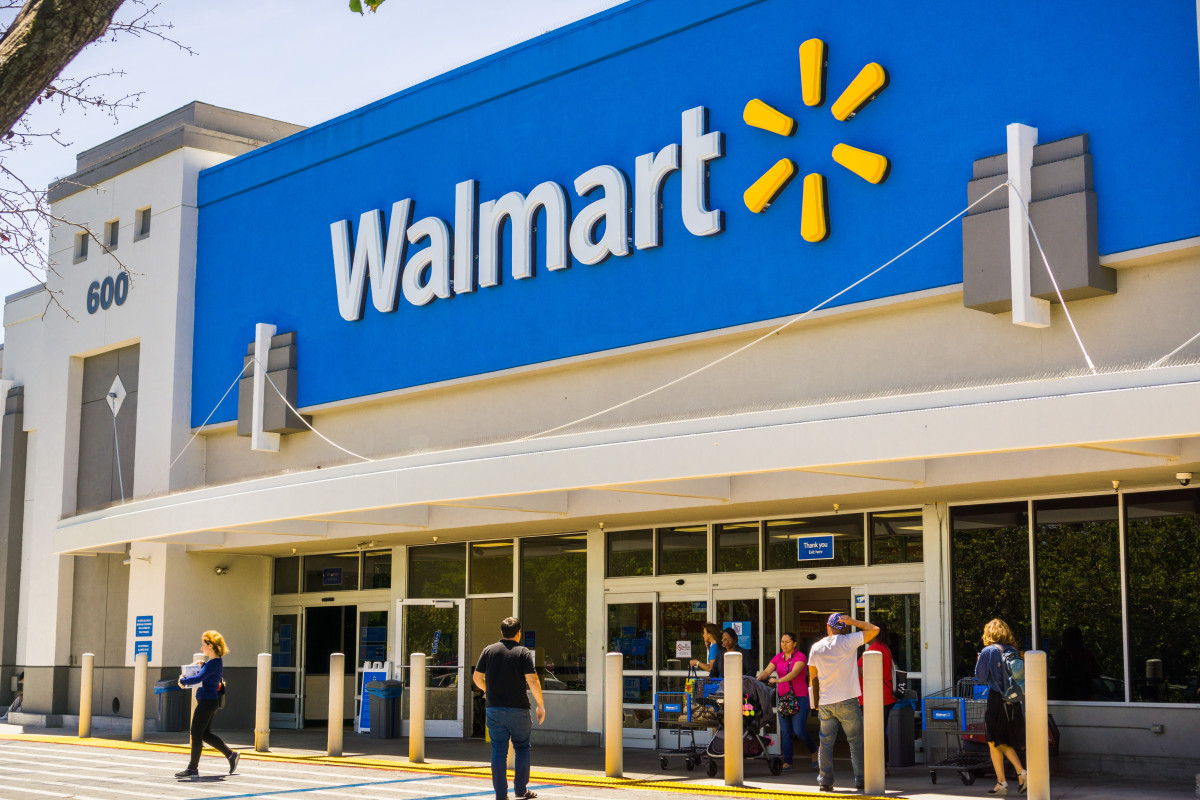
Walmart, the ‘Save money, live better’ store that started in Bentonville, Ark., entered the $1 trillion market cap this week and, on Thursday, Feb 5, set a fresh 52-week high at $129.60.
What does this say about the company and consumer behavior?
It is more than inflation or changing shopper habits; it is also the company’s personal expansion and its ability to adapt to diverse trends.
More Retail:
- Costco sees major shift in member behavior
- Retail chain shuts all locations as legal changes hit industry
- Lululemon struggles to reverse concerning customer behavior
This $1 trillion valuation reflects the massive shift in how people are shopping as inflation continues to tighten budgets and, simultaneously, Walmart continues to expand the variety on its aisles and improve how it treats its workers.
Inflation and shift in grocery shopping
According to USDA Economic Research data, Food-at-home prices increased 2.3% in 2025, with poultry prices 1.4% higher in Dec 2025 than in Dec 2024. Another area was the price of beef and veal, which were 16.4% higher in December 2025 than in December 2024.
The forecast is that overall food prices will rise by 3.0% in 2026. But there is some respite: food-at-home prices, while set to rise 1.7%, are slower than the 20-year historical average price increase of 2.6%.
Another factor is a loyal customer base, and with the introduction of new e-commerce possibilities, Walmart has also been able to “benefit from higher income families choosing to shop with us more often,” C. Douglas McMillon, former CEO of Walmart, said in the company’s Q3 2026 earnings call in November 2025.
The retailer sees over 438 million shoppers visit its page each month, according to Capital One Shopping.
“We continue to benefit from higher-income families choosing to shop with us more often. Middle income households have been steady and while lower income families have been under the additional pressure of late, we’re encouraged by how our teams are meeting them with greater value across necessities, and doing what we can to help them stretch their dollars further,” Former President, CEO & Director of Walmart C. Douglas McMillon said according to reporting in Food Business News.
Walmart reported a 27% hike in e-commerce sales in Q3, driven by gains across grocery, health & wellness, and general merchandise. This came at the heels of Walmart’s partnership with OpenAI, which allows users to buy items from Walmart and Sam’s Club through ChatGPT. Walmart is leveraging the power of more than 700 million weekly active users.
Agentic commerce and Walmart
Earlier this year, on Jan 11, Walmart also announced its plan to partner with Google’s Gemini to make “shopping more intuitive, reliable and perfectly aligned with the rhythms of everyday life.”
These AI partnerships have enabled Walmart to attract a new crowd, the higher-income families.
“Our strategy is clear, and we’re focused on innovating consistently executing to deliver greater sales, margins and returns,” McMillion said.
Its e-commerce sector has been steadily gaining momentum:
- 70% growth in sales through expedited store-fulfilled delivery channels.
- Global eCommerce sales up 27%, buoyed by store-fulfillment pick-up & delivery and marketplace.
- Advertising business Walmart Connect grew 33% in the US.
Investors are taking their bets on this retail giant, which is growing on relatability and by offering worker worker-friendly environment. With membership income growing in double digits, it can be inferred that consumers are committing to Walmart’s growing AI ecosystem.
New leadership marks new era
This $1 trillion milestone comes with a significant change at the top. On January 31, John Furner officially took over as president and CEO of Walmart, succeeding Douglas McMillon.
The period also comes as Walmart successfully made a symbolic move from the New York Stock Exchange (NYSE) to the NASDAQ Composite in December 2025, marking the retailer’s shift to being identified as a tech company.
Related: Costco solves problem that plagues Walmart and Target
To sustain its growth, Walmart is also advancing into new avenues, some of them luxury, which might help retain upper-class customers and broaden its reach. In January, it announced an expansion of its Marketplace into premium musical instruments.
It is being advertised as a curated destination for some of the big and respected names in the music industry, including Fender, Ernie Ball, Roland, Boss, Zildjian, Hercules, Squier, and Barton Bags.
With the company’s Q4 2026 earnings expected to be released on Feb 19, investors and analysts are bullish. The company stock was up 13% this past month and is up 15% year-to-date.
Meanwhile, analysts at Citi raised their target to $147 from $120, while keeping a Buy rating, citing the above consensus report and a balanced risk/reward given the stock’s recent rally.
Piper Sandler also raised its price target to $130 from $123, while keeping an Overweight rating, citing Walmart’s apparel assortment and value pricing, which it sees as providing positive gross-margin benefits. Source: TheFly.
Related: Texas Instruments makes a $7.5B deal no one saw coming
